Engineers today are expected to evaluate designs before prototypes are built—this is where CFD becomes indispensable. This intermediate-level course empowers learners to simulate fluid behavior using ANSYS Fluent and apply it to real-world problems across thermal and aerodynamic systems. The course begins with a conceptual foundation in CFD solvers and governing equations, then transitions to project-based learning through structured videos, scenario-driven coach dialogues, and hands-on labs. Learners will practice the full simulation workflow—from geometry creation and meshing to physics setup and post-processing.

ANSYS FLUENT - FUNDAMENTALS OF CFD

Gain insight into a topic and learn the fundamentals.
Intermediate level
Recommended experience
5 hours to complete
Flexible schedule
Learn at your own pace
What you'll learn
Explain and apply fundamental CFD principles including governing equations, turbulence models, solver strategies used in ANSYS Fluent
Setup and execute Simulation for Low speed and High speed applications, including geometry creation, meshing, numerical setup, and post-processing
Analyze and interpret CFD results—flow behavior, drag forces, thermal effects, and shock structures—and propose design improvements based on insights
Skills you'll gain
- Numerical Analysis
- Physics
- Differential Equations
- Simulations
- Analytics
- Scientific Visualization
- Software Design
- Computer-Aided Design
- Mechanics
- Computational Thinking
- Mechanical Engineering
- Thermal Management
- 3D Modeling
- Simulation and Simulation Software
- Engineering Design Process
- Computer Systems
- Engineering Analysis
Details to know

Shareable certificate
Add to your LinkedIn profile
Recently updated!
February 2026
Assessments
1 assignment
Taught in English
See how employees at top companies are mastering in-demand skills

There are 3 modules in this course
Instructors

Offered by

Explore more from Security
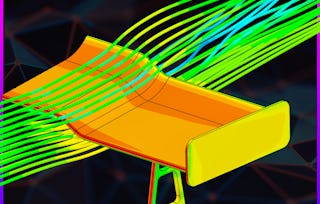 Status: Free
 Status: Preview
 Status: Preview
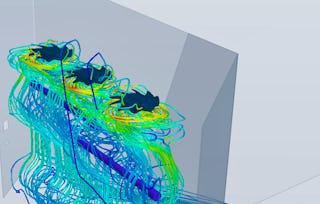 Status: Preview
Why people choose Coursera for their career

Felipe M.
Learner since 2018
"To be able to take courses at my own pace and rhythm has been an amazing experience. I can learn whenever it fits my schedule and mood."

Jennifer J.
Learner since 2020
"I directly applied the concepts and skills I learned from my courses to an exciting new project at work."

Larry W.
Learner since 2021
"When I need courses on topics that my university doesn't offer, Coursera is one of the best places to go."

Chaitanya A.
"Learning isn't just about being better at your job: it's so much more than that. Coursera allows me to learn without limits."