• For Individuals
  • For Businesses
  • For Universities
  • For Governments
Degrees
​
Log In
Join for Free
  • Browse
  • Software Engineering

Software Engineering Courses

Software engineering courses can help you learn programming languages like Python and Java, software development methodologies, version control systems, and testing practices. You can build skills in code optimization, debugging, and collaborative project management. Many courses introduce tools such as Git for version control, Docker for containerization, and integrated development environments (IDEs) like Visual Studio Code, which enhance your ability to develop, test, and deploy software efficiently.

Popular Software Engineering Courses and Certifications


  • Status: Free Trial
    Free Trial
    I

    IBM

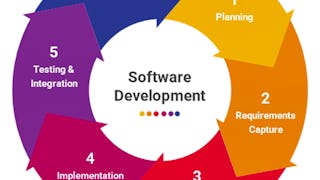
    Introduction to Software Engineering

    Skills you'll gain: Software Development Life Cycle, Software Architecture, Full-Stack Web Development, Software Design, Web Development, Software Development Methodologies, Software Design Patterns, Development Environment, Unified Modeling Language, Software Engineering, Web Applications, Software Development Tools, Software Development, Application Deployment, Programming Principles, Front-End Web Development, Web Language, Back-End Web Development, Integrated Development Environments, Python Programming
    4.7
    Rating, 4.7 out of 5 stars
    ·
    4.8K reviews

    Beginner · Course · 1 - 3 Months

  • Status: Free Trial
    Free Trial
    T

    The Hong Kong University of Science and Technology

    Software Engineering

    Skills you'll gain: Software Design Patterns, Requirements Analysis, White-Box Testing, Software Architecture, Acceptance Testing, Software Development Methodologies, Unified Modeling Language, Software Development Life Cycle, Configuration Management, Software Quality Assurance, Debugging, Software Quality (SQA/SQC), Software Engineering, Software Testing, Object Oriented Design, Functional Requirement, Data Modeling, Systems Design, Project Management, Project Planning

    4.6
    Rating, 4.6 out of 5 stars
    ·
    673 reviews

    Intermediate · Specialization · 3 - 6 Months

  • Status: Free Trial
    Free Trial
    I

    IBM

    Generative AI: Prompt Engineering Basics

    Skills you'll gain: Prompt Engineering, Prompt Patterns, ChatGPT, Generative AI, Model Evaluation
    4.7
    Rating, 4.7 out of 5 stars
    ·
    8.1K reviews

    Beginner · Course · 1 - 4 Weeks

  • Status: Free Trial
    Free Trial
    Status: AI skills
    AI skills
    I

    IBM

    IBM DevOps and Software Engineering

    Skills you'll gain: User Story, Cloud Deployment, CI/CD, Unit Testing, Software Development Life Cycle, Open Web Application Security Project (OWASP), Continuous Integration, Istio, Linux Commands, Software Architecture, Cloud Infrastructure, Test Driven Development (TDD), Application Deployment, Devops Tools, Git (Version Control System), DevOps, Grafana, Software Engineering, Data Import/Export, Application Development
    Build toward a degree

    4.6
    Rating, 4.6 out of 5 stars
    ·
    65K reviews

    Beginner · Professional Certificate · 3 - 6 Months

  • Status: Free Trial
    Free Trial
    Status: AI skills
    AI skills
    I

    IBM

    IBM Full Stack Software Developer

    Skills you'll gain: Cloud Deployment, Unit Testing, Software Development Life Cycle, CI/CD, Server Side, Istio, Cloud-Native Computing, Software Architecture, Cloud Infrastructure, Application Deployment, Responsive Web Design, Node.JS, Django (Web Framework), Git (Version Control System), HTML and CSS, Front-End Web Development, Cloud Computing, Data Ethics, Data Import/Export, Software Development

    Build toward a degree

    4.6
    Rating, 4.6 out of 5 stars
    ·
    60K reviews

    Beginner · Professional Certificate · 3 - 6 Months

  • Status: Free Trial
    Free Trial
    M

    Microsoft

    Microsoft Full-Stack Developer

    Skills you'll gain: Microsoft Copilot, CI/CD, Cascading Style Sheets (CSS), GitHub, C# (Programming Language), HTML and CSS, Azure DevOps, Object Oriented Design, Continuous Integration, Version Control, Git (Version Control System), Object Oriented Programming (OOP), ASP.NET, Full-Stack Web Development, Web Development, Web Design and Development, SQL, Secure Coding, .NET Framework, Graph Theory

    4.6
    Rating, 4.6 out of 5 stars
    ·
    500 reviews

    Beginner · Professional Certificate · 3 - 6 Months

What brings you to Coursera today?

  • Status: Free Trial
    Free Trial
    D

    Duke University

    Java Programming and Software Engineering Fundamentals

    Skills you'll gain: File I/O, UI Components, Object Oriented Design, Java Programming, Software Design, User Interface (UI) Design, Debugging, Web Design and Development, Software Engineering, Code Reusability, Hypertext Markup Language (HTML), Computer Programming, Program Development, Event-Driven Programming, Bioinformatics, Encryption, Javascript, Algorithms, Data Analysis, Cascading Style Sheets (CSS)

    4.6
    Rating, 4.6 out of 5 stars
    ·
    22K reviews

    Beginner · Specialization · 3 - 6 Months

  • Status: Free Trial
    Free Trial
    I

    IBM

    Applied Software Engineering Fundamentals

    Skills you'll gain: Unit Testing, Software Development Life Cycle, Linux Commands, Software Architecture, Bash (Scripting Language), Shell Script, Git (Version Control System), GitHub, Full-Stack Web Development, Flask (Web Framework), Software Design, Version Control, File Management, Unix Shell, Web Development, Linux, Application Deployment, Data Import/Export, Python Programming, NumPy

    4.6
    Rating, 4.6 out of 5 stars
    ·
    52K reviews

    Beginner · Specialization · 3 - 6 Months

  • Status: Free Trial
    Free Trial
    V

    Vanderbilt University

    Claude Code: Software Engineering with Generative AI Agents

    Skills you'll gain: Claude Code, Anthropic Claude, Multimodal Prompts, Prompt Engineering, Prompt Patterns, Generative AI Agents, AI Orchestration, Context Engineering, Code Reusability, AI Workflows, Software Development, Generative AI, Software Quality Assurance, Software Development Life Cycle, Automation, Artificial Intelligence, Software Architecture, Software Testing, Software Design, Software Development Methodologies

    4.7
    Rating, 4.7 out of 5 stars
    ·
    161 reviews

    Beginner · Course · 1 - 3 Months

  • Status: Free Trial
    Free Trial
    V

    Vanderbilt University

    Generative AI Software Engineering

    Skills you'll gain: Claude Code, Prompt Engineering, Agentic systems, ChatGPT, Anthropic Claude, Retrieval-Augmented Generation, Generative AI Agents, Prompt Patterns, Multimodal Prompts, Generative AI, Agentic Workflows, AI Personalization, Software Development Tools, Artificial Intelligence and Machine Learning (AI/ML), Software Engineering, Software Development, Automation, Software Architecture, Software Testing, Software Design

    4.8
    Rating, 4.8 out of 5 stars
    ·
    9.1K reviews

    Beginner · Specialization · 3 - 6 Months

  • Status: Free Trial
    Free Trial
    U

    University of Alberta

    Software Design and Architecture

    Skills you'll gain: Software Architecture, Model View Controller, Unified Modeling Language, Object Oriented Design, Service Oriented Architecture, API Design, Systems Architecture, Web Services, Software Design Patterns, Software Design, Simple Object Access Protocol (SOAP), Microservices, Restful API, Software Design Documents, Software Visualization, Code Review, Product Family Engineering, Object Oriented Programming (OOP), Software Development, Java

    4.6
    Rating, 4.6 out of 5 stars
    ·
    4K reviews

    Beginner · Specialization · 3 - 6 Months

  • Status: Free Trial
    Free Trial
    Status: AI skills
    AI skills
    A

    Amazon

    Amazon Junior Software Developer

    Skills you'll gain: File I/O, Git (Version Control System), Software Development Methodologies, JUnit, Systems Development Life Cycle, Requirements Analysis, Version Control, Application Development, Software Development Life Cycle, Full-Stack Web Development, Test Driven Development (TDD), SQL, Software Development, Restful API, Database Management, Object Oriented Programming (OOP), Decision Intelligence, Digital Transformation, Java Programming, Generative AI

    4.3
    Rating, 4.3 out of 5 stars
    ·
    615 reviews

    Beginner · Professional Certificate · 3 - 6 Months

1234…834

In summary, here are 10 of our most popular software engineering courses

  • Introduction to Software Engineering: IBM
  • Software Engineering: The Hong Kong University of Science and Technology
  • Generative AI: Prompt Engineering Basics: IBM
  • IBM DevOps and Software Engineering: IBM
  • IBM Full Stack Software Developer: IBM
  • Microsoft Full-Stack Developer: Microsoft
  • Java Programming and Software Engineering Fundamentals: Duke University
  • Applied Software Engineering Fundamentals: IBM
  • Claude Code: Software Engineering with Generative AI Agents: Vanderbilt University
  • Generative AI Software Engineering: Vanderbilt University

Frequently Asked Questions about Software Engineering

Software engineering is the practice of designing, building, testing, and maintaining software in a structured and reliable way. It combines programming with problem-solving, system design, collaboration, quality assurance, and development workflows. Courses such as IBM’s Introduction to Software Engineering and The Hong Kong University of Science and Technology’s Software Engineering can help you understand how software projects move from requirements to working applications. On Coursera, you can choose introductory or more applied courses depending on whether you want a broad overview or hands-on development practice.‎

Software engineering is used in roles that involve building, improving, testing, or operating software systems. Common examples include software developer, full-stack developer, backend developer, frontend developer, application developer, DevOps engineer, quality assurance tester, and technical support engineer. Programs such as IBM Full Stack Software Developer, Microsoft Full-Stack Developer, and IBM DevOps and Software Engineering connect software engineering concepts with practical development and deployment workflows. Coursera courses can help you explore these role areas while building skills in programming, version control, application development, and software delivery.‎

Before learning software engineering, it helps to understand basic programming, problem-solving, and how computers run software. You do not need to know everything in advance, but familiarity with variables, functions, data structures, and command-line basics can make the learning process smoother. Duke University’s Java Programming and Software Engineering Fundamentals is a useful option for learners who want to build programming foundations alongside software engineering concepts. If you are newer to the field, starting with an introductory course can help you build confidence before moving into full-stack or DevOps topics.‎

Skills that complement software engineering include programming, data structures, databases, web development, cloud basics, testing, Git, DevOps, and communication. These skills help you build software that is not only functional, but also maintainable, collaborative, and easier to deploy. IBM DevOps and Software Engineering emphasizes development workflows and delivery practices, while Microsoft Full-Stack Developer and IBM Full Stack Software Developer support broader application-building skills. Coursera’s course selection can help you combine software engineering with related technical skills based on the kinds of projects you want to build.‎

A good way to start learning software engineering is to begin with core concepts, then practice by building small software projects. Start with an introductory course to learn how software is planned, designed, tested, and maintained, then add programming and development tools as you go. IBM’s Introduction to Software Engineering and Applied Software Engineering Fundamentals are relevant starting points, while Duke University’s Java Programming and Software Engineering Fundamentals can help you strengthen coding basics. On Coursera, you can follow a path from beginner concepts to hands-on full-stack or DevOps coursework.‎

Yes. You can start learning software engineering on Coursera for free in two ways:

  1. Preview the first module of many software engineering courses at no cost. This includes video lessons, readings, graded assignments, and Coursera AI (where available).
  2. Start a 7-day free trial for Specializations or Coursera Plus. This gives you full access to all course content across eligible programs within the timeframe of your trial.

If you want to keep learning, earn a certificate in software engineering, or unlock full course access after the preview or trial, you can upgrade or apply for financial aid.‎

The best beginner software engineering courses are usually those that introduce development concepts clearly and include practical examples. On this page, IBM’s Introduction to Software Engineering, IBM’s Applied Software Engineering Fundamentals, and Duke University’s Java Programming and Software Engineering Fundamentals are especially relevant for learners building foundations. If you already have some programming experience, The Hong Kong University of Science and Technology’s Software Engineering may help you expand into broader engineering practices. Coursera lets you compare beginner-friendly options by provider, course focus, skills taught, and whether you want a single course or a longer program.‎

Software engineering courses typically cover programming foundations, requirements, software design, testing, debugging, version control, project workflows, and maintenance. More applied courses may also include web development, full-stack development, DevOps, cloud-based deployment, and collaboration practices used in software teams. For example, IBM DevOps and Software Engineering focuses on delivery workflows, while IBM Full Stack Software Developer and Microsoft Full-Stack Developer emphasize building applications across the front end and back end. Coursera course pages can help you review specific topics and choose the next course that matches your current skill level.‎

This FAQ content has been made available for informational purposes only. Learners are advised to conduct additional research to ensure that courses and other credentials pursued meet their personal, professional, and financial goals.

Other topics to explore

Arts and Humanities
338 courses
Business
1095 courses
Computer Science
668 courses
Data Science
425 courses
Information Technology
145 courses
Health
471 courses
Math and Logic
70 courses
Personal Development
137 courses
Physical Science and Engineering
413 courses
Social Sciences
401 courses
Language Learning
150 courses

Coursera Footer

Skills

  • Accounting
  • Artificial Intelligence (AI)
  • Cybersecurity
  • Data Analytics
  • Digital Marketing
  • Human Resources (HR)
  • Microsoft Excel
  • Project Management
  • Python
  • SQL

Professional Certificates

  • Google AI Certificate
  • Google Cybersecurity Certificate
  • Google Data Analytics Certificate
  • Google IT Support Certificate
  • Google Project Management Certificate
  • Google UX Design Certificate
  • IBM AI Engineering Certificate
  • IBM AI Product Manager Certificate
  • IBM Data Science Certificate
  • Intuit Academy Bookkeeping Certificate

Courses & Specializations

  • AI Essentials Specialization
  • AI For Business Specialization
  • AI For Everyone Course
  • AI in Healthcare Specialization
  • Deep Learning Specialization
  • Excel Skills for Business Specialization
  • Financial Markets Course
  • Machine Learning Specialization
  • Prompt Engineering for ChatGPT Course
  • Python for Everybody Specialization

Career Resources

  • Career Aptitude Test
  • CAPM Certification Requirements
  • CompTIA A+ Certification Requirements
  • CompTIA Security+ Certification Requirements
  • Essential IT Certifications
  • High-Income Skills to Learn
  • How to Learn Artificial Intelligence
  • PMP Certification Requirements
  • Popular Cybersecurity Certifications
  • Share your Coursera learning story

Coursera

  • About
  • What We Offer
  • Leadership
  • Careers
  • Catalog
  • Coursera Plus
  • Professional Certificates
  • MasterTrack® Certificates
  • Degrees
  • For Enterprise
  • For Government
  • For Campus
  • Become a Partner
  • Social Impact
  • Free Courses
  • Udemy

Community

  • Learners
  • Partners
  • Beta Testers
  • Blog
  • The Coursera Podcast
  • Tech Blog

More

  • Press
  • Investors
  • Terms
  • Privacy
  • Help
  • Accessibility
  • Contact
  • Articles
  • Directory
  • Affiliates
  • Modern Slavery Statement
  • Do Not Sell/Share
Learn Anywhere
Download on the App Store
Get it on Google Play
Logo of Certified B Corporation
© 2026 Coursera Inc. All rights reserved.
  • Coursera Facebook
  • Coursera Linkedin
  • Coursera Twitter
  • Coursera YouTube
  • Coursera Instagram
  • Coursera TikTok