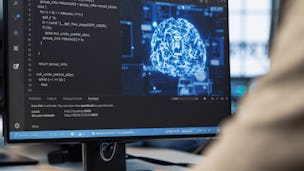


This course teaches software developers how to implement, deploy, and maintain machine learning systems using Python, scikit-learn, FastAPI, and Docker. You'll learn to build ML pipelines, preprocess data, evaluate models, and serve them as production-ready REST APIs.
Module 1 covers core ML algorithms and workflows, including supervised and unsupervised learning paradigms. You'll implement regression, classification, and clustering using scikit-learn and learn to evaluate models using appropriate metrics. Module 2 focuses on data preparation and feature engineering. You'll clean and preprocess data using pandas, construct feature pipelines with transformations and scaling, and optimize feature sets to enhance model performance. Module 3 explores building and testing ML code. You'll structure ML codebases for modularity and reuse, implement testing workflows using pytest, and learn logging and debugging techniques for ML pipelines. Module 4 covers serving and deploying ML models. You'll expose models as REST APIs using FastAPI, containerize services with Docker, and evaluate deployed models using inference testing. By the end of this course, you will: • Implement and evaluate ML algorithms for classification, regression, and clustering tasks • Build reproducible data pipelines with preprocessing and feature engineering • Develop modular, tested ML codebases following software engineering best practices • Deploy ML models as containerized REST APIs using FastAPI and Docker Disclaimer: This is an independent educational resource created by Board Infinity for informational and educational purposes only. This course is not affiliated with, endorsed by, sponsored by, or officially associated with any company, organization, or certification body unless explicitly stated. The content provided is based on industry knowledge and best practices but does not constitute official training material for any specific employer or certification program. All company names, trademarks, service marks, and logos referenced are the property of their respective owners and are used solely for educational identification and comparison purposes.